Board feet vs cubic volume: which one your appraisal uses
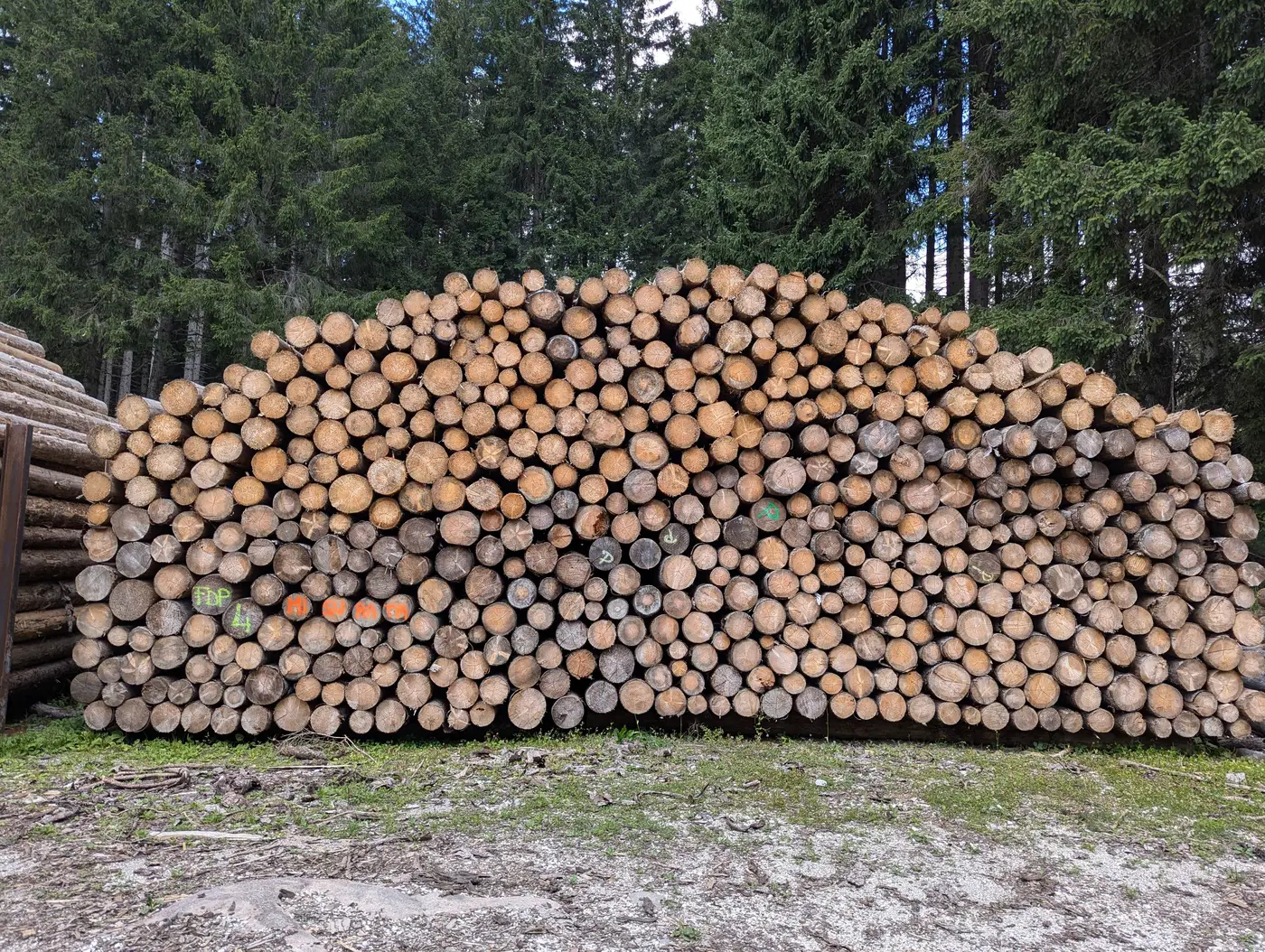
A cruise report or an appraisal file will often carry both numbers: so many thousand board feet, so many cubic meters. They're not interchangeable, and which one drives the valuation depends on what the timber is for and who's reading the report.
Board feet measure what a mill can cut
A board foot is a lumber-recovery unit: a piece of wood 12 inches by 12 inches by 1 inch, or its equivalent. The board-foot figure estimates what a sawmill can get out of a tree, not the volume of wood standing in it, which is why that number shifts with the log rule you apply.
Scribner is the one most Pacific Northwest and California appraisals default to, because it was built from diagrams of sawn boards and tends to run conservative on smaller-diameter logs. Doyle underestimates volume on small logs badly enough that almost nobody west of the Mississippi uses it anymore, though it still shows up in parts of the South and Appalachians. International 1/4-inch sits closer to true cubic content and shows up more in Forest Service cruises. Pull two appraisals on the same stand using different log rules and you'll get two different board-foot totals from the same trees. The spread is the log rule doing exactly what it was built to do, not a mistake in either cruise.
Board feet is the unit buyers price against on a timber sale appraisal, because a stumpage bid is built off what the mill expects to recover in lumber, not off the raw volume of wood in the stem. That link to the stumpage market is why board feet stays the default unit across most sawtimber country.
Cubic volume measures the wood itself
Cubic volume, usually reported in cubic meters or cubic feet, measures the solid wood in the stem, bark excluded or included depending on the standard, independent of what any particular mill can recover from it. It doesn't care about saw kerf, log rule tables, or minimum top diameters. A cull log with rot in the center still has cubic volume even though it has little or no board-foot value.
That's exactly why cubic volume is the unit carbon accounting runs on. Biomass and carbon-stock equations convert from cubic volume of merchantable wood, not from board feet, because the carbon in a tree doesn't know or care what a sawmill would pay for it. International forestry outside the US and Canada reports almost exclusively in cubic meters, so any holding with cross-border comps, or any carbon project following an international methodology, needs the stand in cubic terms regardless of what the local stumpage market trades in.
There's no single clean cubic meter conversion factor from board feet. The ratio shifts with average log diameter, taper, species, and which log rule generated the board-foot number in the first place. Rough rule-of-thumb multipliers circulate in cruiser handbooks, but an appraisal that needs a defensible cubic figure for a carbon registry or an international buyer should derive it from the stand data itself, not back it out of a Scribner tally with a generic conversion ratio.
Which unit your appraisal needs
A timber sale appraisal on sawtimber-dominant acres headed to a regional mill leads with board feet, usually Scribner west of the Rockies, because that's the unit the buyer is pricing against. A carbon project baseline or an international timberland holding needs cubic volume, because that's the unit the methodology or the cross-border comp set requires. A REIT portfolio spanning both uses often ends up carrying both figures side by side in the same report: one for the stumpage conversation, one for the carbon or biomass conversation.
The unit follows the purpose. Picking board feet on acres headed into a carbon registry just because it's the familiar figure means re-running the numbers later.
Either way, the volume estimate behind both figures has to come from somewhere. A canopy surface model built from overlapping stereo imagery, like the standing-volume layer this site builds, can be regressed into whichever unit the appraisal or registry asks for. If your reporting cycle needs a current cubic or board-foot figure without a ground cruise crew in the field, that's worth a look.